Christian Habersaat
The Hanging GirlChristian Habersaat’s suicide turns a neglected hit-and-run investigation into the case that occupies Department Q, but his legacy is more complicated than the transfer of a cold case. A retired police sergeant from Listed, he spent years trying to identify the driver who killed Alberte Goldschmid. His papers reveal an investigator of formidable persistence, a father and husband caught in the case’s concealed family history, and a man who ultimately understood that his son was the killer but could not bring himself to pursue him.
Identity and Background
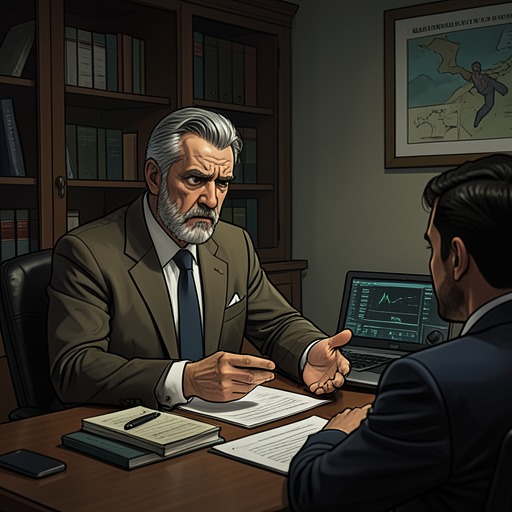
Habersaat is introduced to Carl Mørck as an old acquaintance from Bornholm, though Carl does not immediately remember him. By the time their connection becomes important, Habersaat is a police sergeant approaching retirement. His colleagues describe his uniformed work as sound, and say that his depression was not especially apparent in the day-to-day life of the station. At home in Listed, however, he lived alone after divorcing June Habersaat and had become bitterly absorbed in an old case.
The case was initially regarded as a relatively minor hit-and-run, but the victim was a young girl, Alberte. Habersaat made solving her death the work of his life despite not serving in criminal investigation. His commitment outlasted his formal role and the attention of the local police; it also narrowed his private life around a mystery he could not resolve. The contrast between competent public service and solitary obsession defines the distance between the policeman his colleagues knew and the investigator he had become.
Suicide and the Case’s Transfer
At his farewell reception in the community hall in Listed, Habersaat released the safety on his pistol and shot himself in front of ten witnesses. The abruptness of the act makes the case’s transfer literal as well as professional: Department Q learns of the death while being drawn into the investigation he had left unfinished. His suicide is not presented simply as the end of his own effort. Carl comes to believe that Habersaat had suspected a particular man for years, knew he could not find him himself, and wanted others to take over. In that reading, the suicide becomes a means of ensuring that the case would continue after him.
The records show why a new investigation was necessary. The police papers had not been updated since 2002, and the original inquiry had never considered premeditated murder. Investigators in Rønne had settled on a hit-and-run without identifying either the vehicle or its driver. Habersaat’s persistence pushed the inquiry toward a more specific theory, but his insistence did not make that theory certain. Carl recognizes both sides of his legacy: Habersaat kept the case alive, yet the evidence still had to be tested rather than accepted on the strength of his conviction.
The Investigator’s Papers
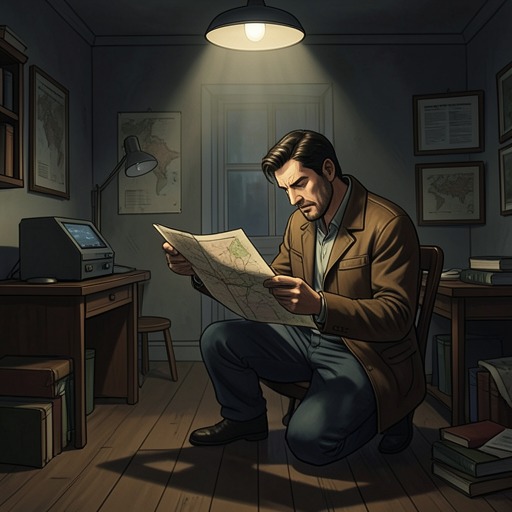
Habersaat’s notes, drawings, and interviews give Department Q a trail that ordinary case files had failed to preserve. A report dated November 24, 1997, records work conducted shortly after Alberte’s disappearance and after Habersaat had found her. Other papers document his attempts to connect the scene, a recovered bicycle, and a wooden splint. The splint’s position, recorded in his handwriting as a straight line between the bicycle found in a thicket and the apparent impact point, became one element of his continuing reconstruction.
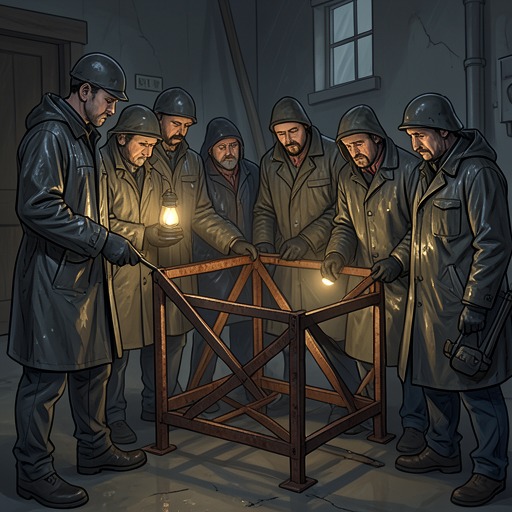
He also pursued the possibility that a wooden board and a shovel blade had been attached to a vehicle. Carl sends Habersaat’s drawings to technicians and asks them to examine the earlier analysis of the board, calculate how thick it would have needed to be to survive a collision, and assess whether it could have been secured to the hood of a Volkswagen Kombi without leaving marks. He also asks whether the impact could have thrown Alberte toward the windshield and broken it, and whether the photograph of the Kombi’s driver can be sharpened. These are questions, not established conclusions; Habersaat’s papers give the new investigators a set of testable propositions rather than a finished proof.
His search had repeatedly produced little. After an appeal on local television for people to report wooden building boards with defects, about twenty mostly local people came forward, but their finds were all pine. Habersaat recorded that no leads followed. The blunt gap between the effort and the result conveys the accumulated cost of his investigation: sustained labor, many dead ends, and no reliable identification of the driver.
The papers also include an interrogation transcript. Carl reads Habersaat’s interview with Synne Veland and becomes frustrated by a basic investigative omission: Habersaat had been unable to obtain school records, although civil-registration information and details included in his own interrogation files offered routes to the relevant identities. The episode does not erase the value of his archive, but it shows that tenacity did not prevent procedural mistakes. Department Q can use his work while also correcting what he failed to pursue.
Family, Suspicion, and Recognition
Habersaat’s final explanation places the crime inside the family he had lost. June recounts that she and Christian were at the dinner table with Bjarke Habersaat when Christian said he had found Alberte in a tree and that the discovery had left a terrible impression on him. Bjarke had already worked out what his mother had done. He kept silent, and June believed that the knowledge helped make it impossible for him to continue living under the same roof as his father after she moved out. He lived for a time with Karin Kofoed and with June in Aakirkeby, then found a place of his own. The secret had divided the household without becoming a subject the family could discuss openly.
Habersaat’s investigation itself was pulled between two suspicions. He knew that June had been involved with her former lover, the man associated with the Volkswagen Kombi, and says he learned of the relationship through people on the island. He also suspected Bjarke. Yet the splint and other evidence temporarily encouraged him to believe he was wrong about his son. He could not see a motive: Bjarke seemed to have no interest in women, a subject that had caused conflict between Bjarke and June. Habersaat’s judgment was therefore shaped not only by clues, but by his desire to protect his son and by his uncertainty about what Bjarke could have wanted.
The decisive discovery came in Bjarke’s old room, where Habersaat had gathered his investigation materials. In a box with old computer games he found a poem about Bjarke’s fascination with the man at the center of the case. Habersaat understood that Bjarke had been in love with the same man as June, and that Alberte had displaced him when the man turned his attention to the younger girl. He concluded that Bjarke had killed Alberte for that reason. The discovery transformed what had looked like a motive-less crime into a consequence of concealed desire and jealousy, while also making the father’s investigation inseparable from his own family’s history.
Final Letter and Narrative Role
In a letter dated April 29, 2014, Habersaat apologizes for insisting on pinning the crime on an innocent man. He admits that, although he had followed evidence toward the man with the Volkswagen Kombi, Bjarke had a powerful motive after all. He leaves his son’s fate to the investigators because he cannot find it in himself to go after his own child. The letter ends his private pursuit without resolving its moral burden: Habersaat has recognized the truth, but the responsibility for acting on it passes to others.
His role in the novel depends on this double inheritance. The abandoned file, the dated notes, the drawings, and the failed search for defective pine boards make his persistence materially available to Department Q. The final letter, however, exposes the limits of an investigation conducted by a father whose loyalties could not be separated from his evidence. Habersaat’s suicide brings the case back into motion; his papers both advance it and reveal how grief, shame, and protection had shaped the path he took.